

Consumer sectors are deeply out of favour.
Both Consumer Discretionary and Consumer Staples stand out as the most bearish equity sectors in our sentiment data. And it is not just a sector story. They also rank among the least popular assets across the entire universe we track.
There are two reasons why this has put Consumer equities on our radar.
First, the sheer extent of investor pessimism. Sentiment is not just bearish, but exceptionally bearish across a broad range of indicators.
Second, the recent improvement in price momentum.
Both Consumer sectors have benefited from the rotation out of Tech, along with most other sectors. But rotations tend to be relatively indiscriminate, particularly in their early stages, and the beneficiaries have very different sentiment backdrops.
Consumer equities stand out for their combination of improving momentum and still deeply bearish sentiment.
That is always an interesting combination from a contrarian perspective. And it could become increasingly important as the initial rotation runs its course and investors become more selective about where they allocate capital.
The point of this note is not to call the exact bottom in Consumer equities. Rather, it is to do what sentiment analysis is good at:
- Identify when pessimism has become unusually widespread, raising the potential for positive surprises.
- Understand what investors are already expecting, stress-test the prevailing bearish narratives and identify what could force a rethink.
The question is whether Consumer equities can turn a rotation-driven recovery into something more sustainable
Sentiment & Positioning
We always start with the data.
Consumer sector sentiment remains near rock-bottom levels and has barely improved despite somewhat stronger returns recently.
Our Sentiment Matters Aggregates (SMAs) currently stand at just the 4th percentile for Consumer Staples and the 15th percentile for Consumer Discretionary.
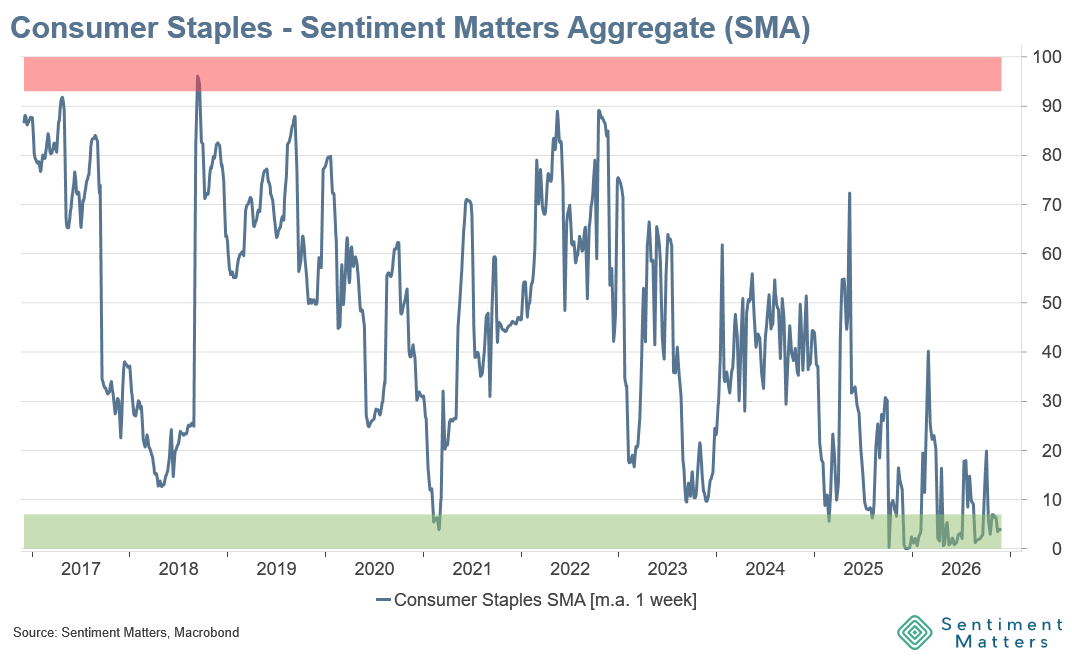
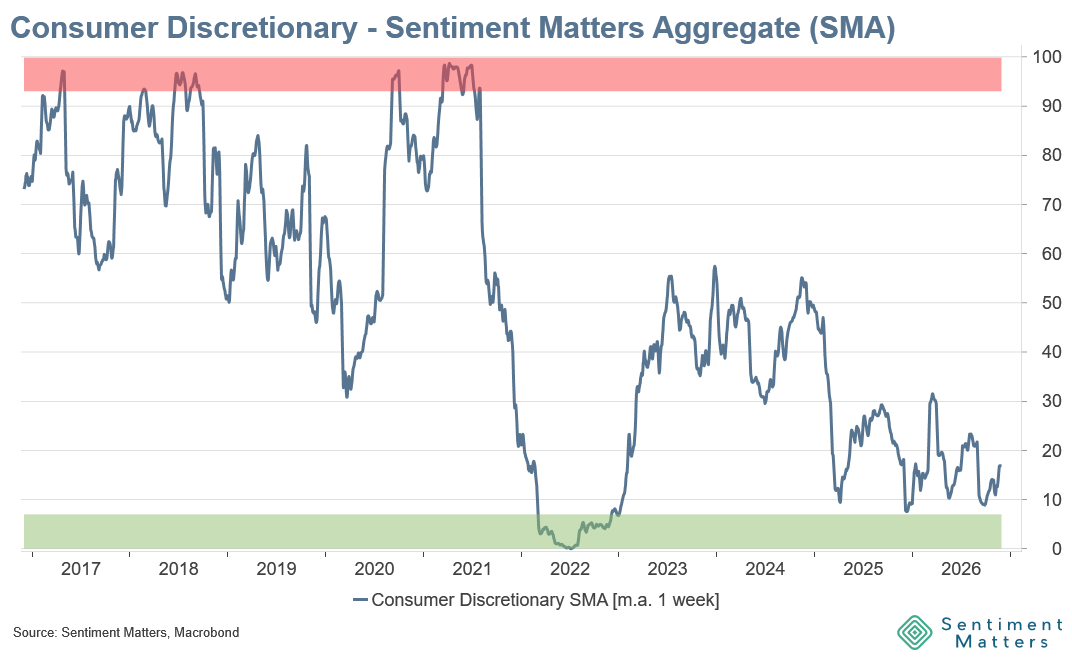
The persistence of bearish sentiment is also remarkable. SMAs for both sectors have spent most of the past two years below the 30th percentile, which we categorise as bearish. The last time both spent more than a couple of weeks in bullish territory was during the post-pandemic reopening trade.
At current levels, Consumer Staples sentiment is below its historical buy threshold, while Consumer Discretionary is approaching its own.
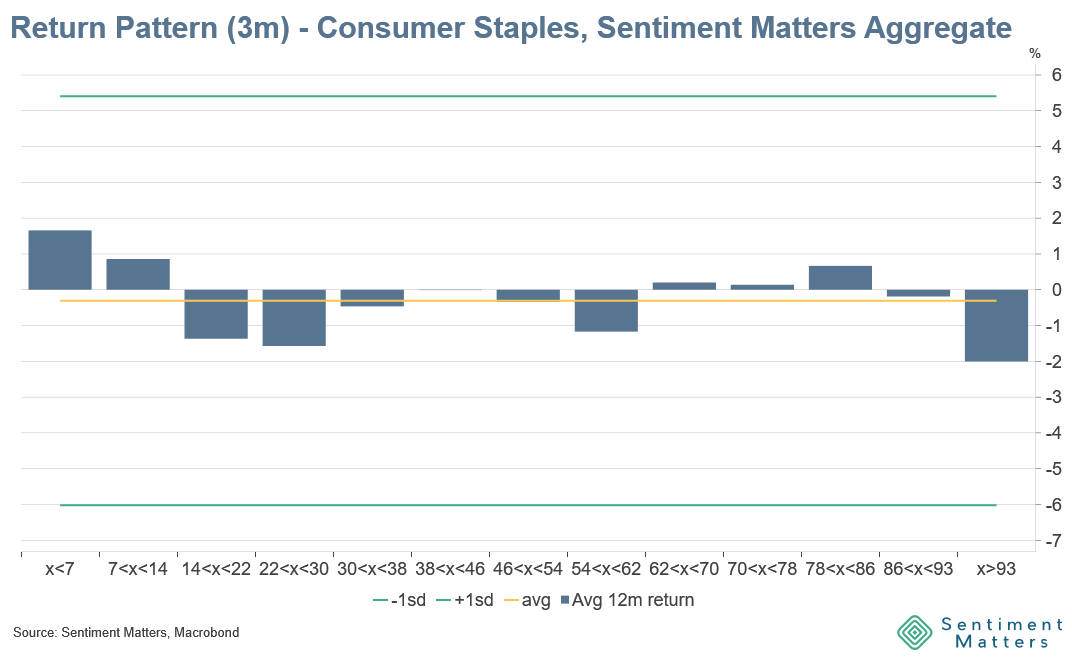
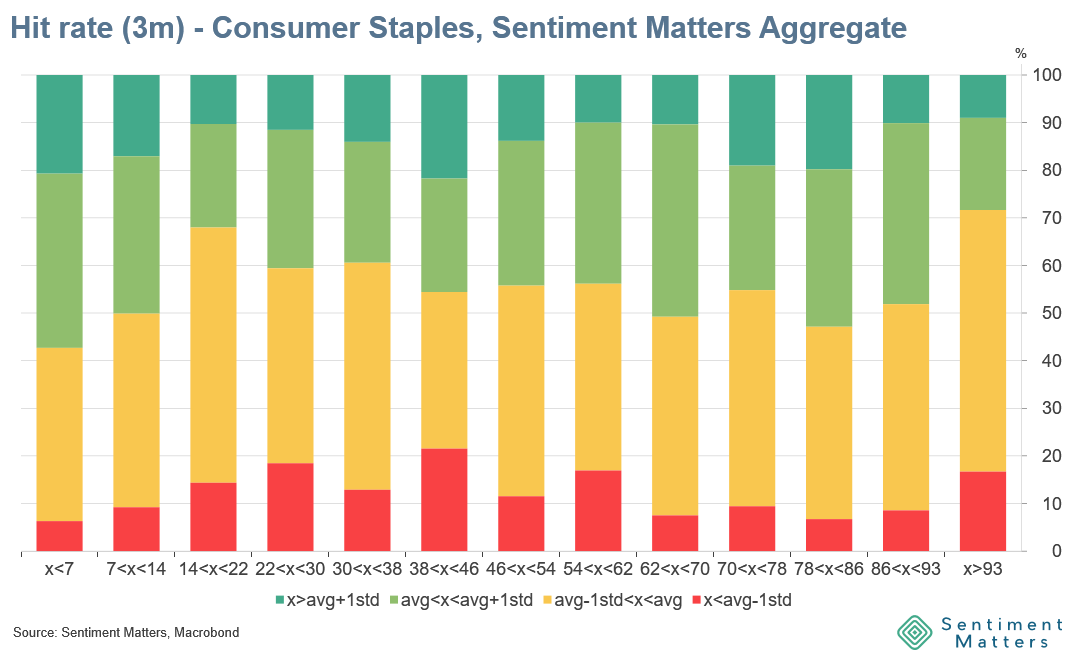
For Staples, SMA readings of 7 or lower have historically been followed by the sector outperforming the S&P 500 by an average of 1.6 percentage points over the subsequent three months. That is better than the average return following any other SMA level.
The historical signal has been strongest over three months, but Staples has outperformed more often than not across all four horizons we measure: one, three, six and twelve months.
Consumer Discretionary's historical buy threshold also sits at the 7th percentile, although its SMA is not quite that low today.
Here, the historical signal has been strongest over twelve months. Readings below the buy threshold have been followed by average outperformance of 3.3 percentage points over the subsequent year, with above-average relative returns occurring 61% of the time.
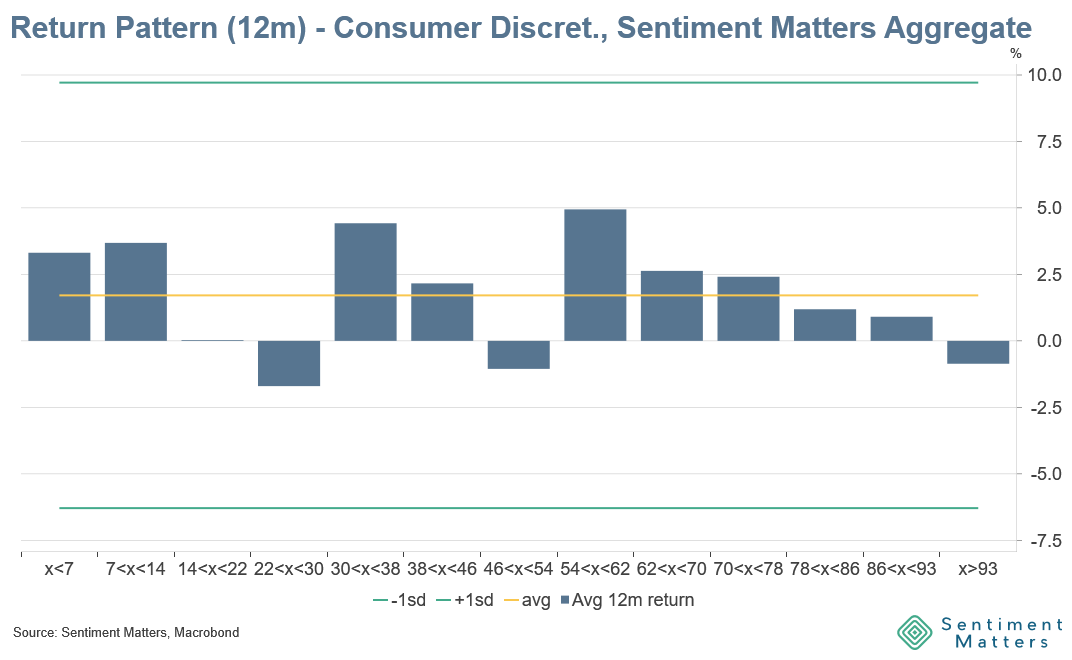
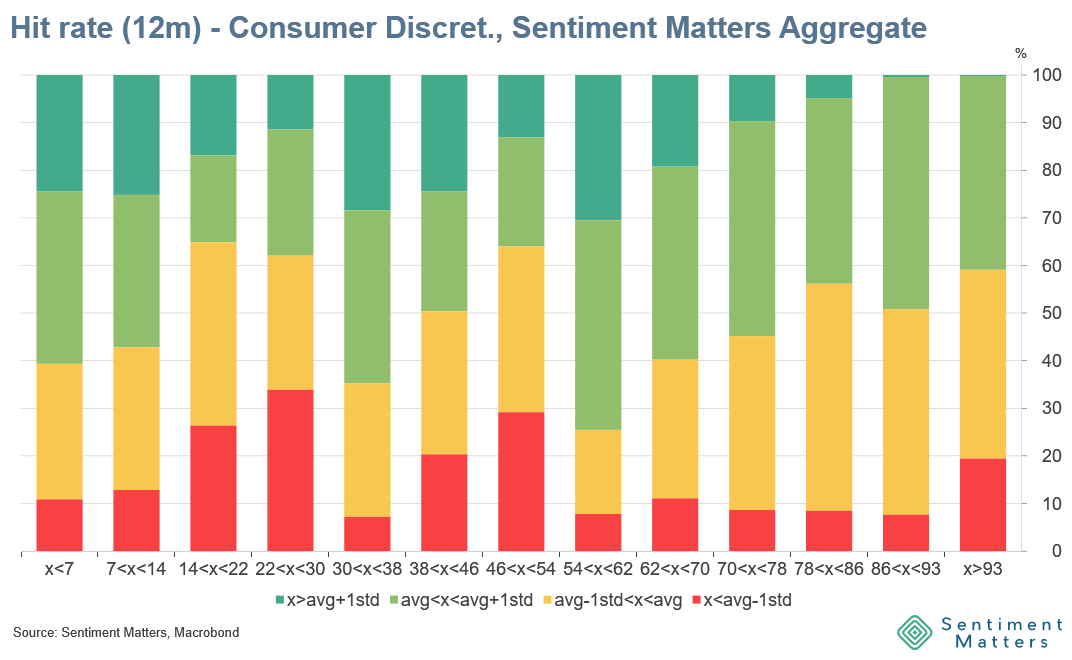
Of course, these are historical averages, not forecasts. Bearish sentiment can become even more bearish, and reaching a historical buy threshold does not guarantee a recovery.
Going deeper
One level deeper, the Heatmaps help us understand just how broad-based the pessimism really is.