

For the past two months, markets have traded one theme: the war with Iran.
It drove the sell-off. It drove the rebound.
Now, with several equity markets back at or above their previous highs, that phase looks to be ending. Earnings season is picking up, and with it a shift in the news flow back to corporate fundamentals.
But while prices have largely round-tripped, sentiment hasn’t simply reset.
Some trades have unwound. Others have rotated. And in a few areas, new extremes have emerged.
This is a good moment to step back and take stock.
In this note, I look at:
- A textbook geopolitical episode
- The rebound — what it says and what it doesn’t say
- What’s next for war outperformers
- The new market setup
- What’s changed beneath the surface: Tech, Cyclicals, Consumer Discretionary
You can read the full note below — or jump straight to the Bottom Line for the key takeaways.
A textbook geopolitical episode
In many ways, this has been a textbook market response to a geopolitical shock.
The initial reaction was fast and emotional. Risk premia expanded across assets. Oil surged. Domestic Defensives outperformed. Cyclicals sold off.
And then, just as quickly, much of that move reversed.
That pattern is not unusual. Geopolitical shocks tend to create short-term dislocations, but those moves rarely persist unless the shock escalates and translates into a meaningful hit to global profits.
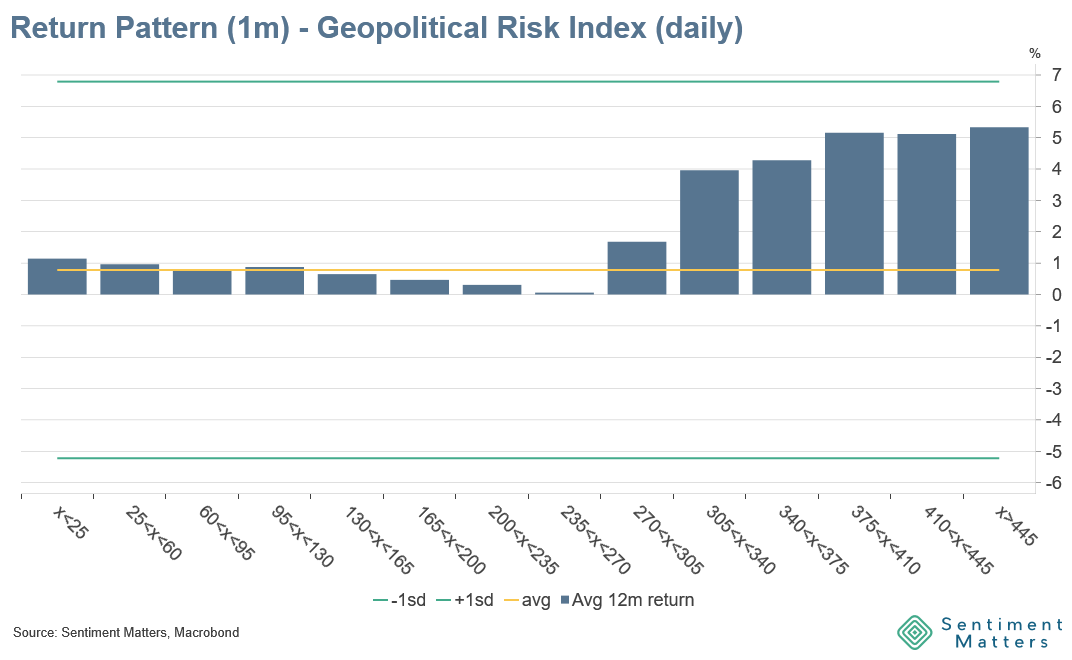
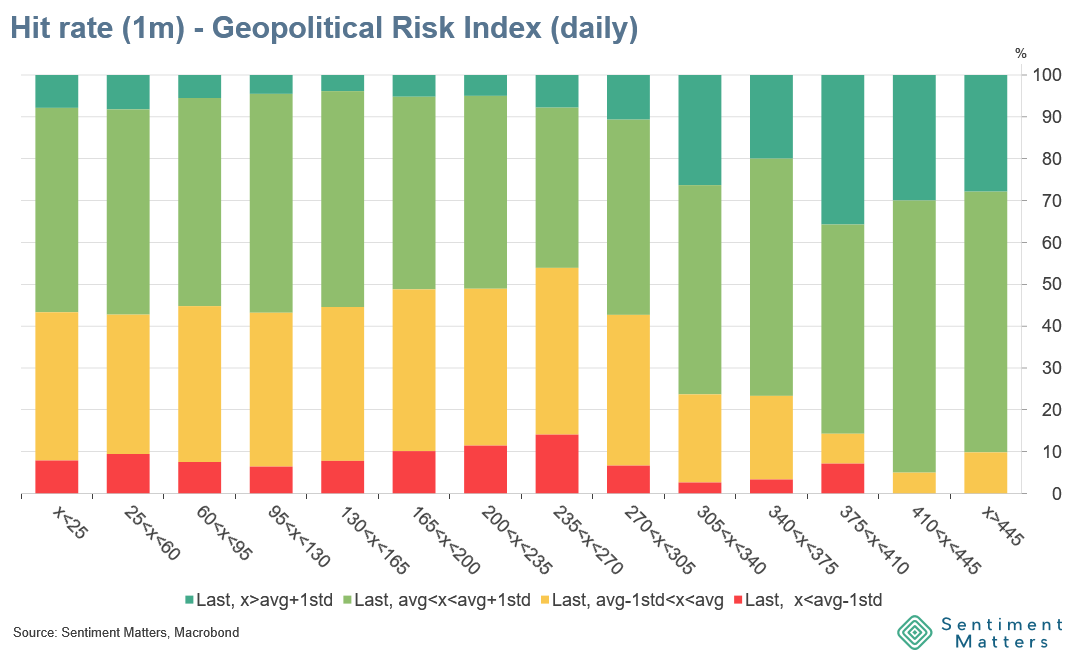
You can see this clearly in the data. The Geopolitical Risk Index (GPR) captures spikes in perceived geopolitical stress. Historically, those spikes have been followed by the strongest equity returns over short horizons. Over longer periods, the effect fades.
When GPR moved above 300, the S&P 500 delivered above-average returns:
- 81% of the time over the next month
- 74% over three months
- 63% over six months
- 49% over twelve months
Geopolitical shocks tend to be short-term stress events. Markets react quickly, but they also adjust quickly. The opportunity lies in that adjustment phase, not in trying to predict how the underlying conflict evolves.
Market Rebound – what it says and what it doesn’t say
I’ve read a lot of comments along the lines of: How can equity markets be at new highs when the war is not over and oil prices are still well above pre-war levels?